
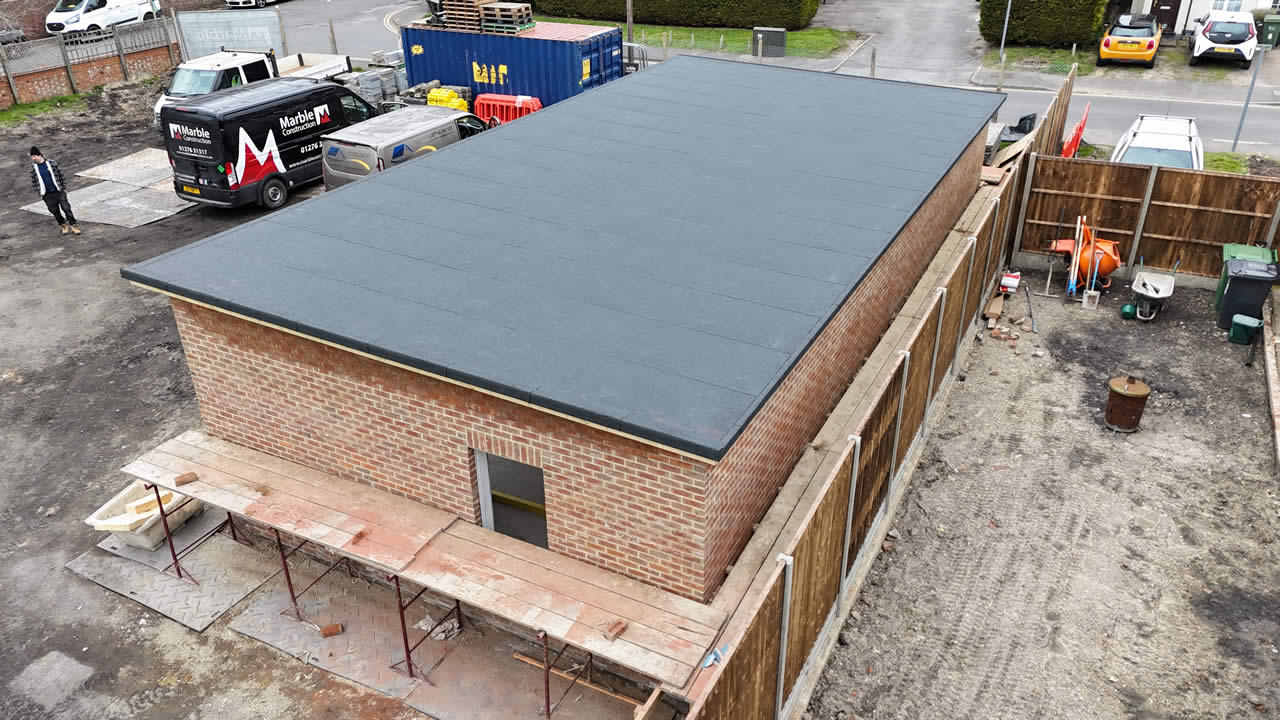
Few roofing topics generate as much anxiety among homeowners as flat roofs. The moment a property listing mentions a flat roof extension, alarm bells ring. Estate agents know it, surveyors note it, and mortgage lenders have historically treated it with suspicion. The reputation precedes the reality — and, in most cases, that reputation is based on the experience of roofing systems installed decades ago.
It is time to separate myth from reality. Modern flat roofing systems are fundamentally different from the failing single-layer bitumen felt that gave the entire category its reputation for early failure. Here is a clear-eyed look at the most persistent flat roofing myths — and the truth behind each one.
Myth 1: Flat Roofs Always Leak
This is the most persistent myth, and it has its roots in genuine historical experience. Single-layer bitumen felt systems commonly installed in the mid-to-late twentieth century were genuinely prone to failure. They were often installed cheaply, on poorly prepared substrates, with inadequate attention to drainage, upstands, and edge details. They leaked, they failed early, and they confirmed the worst fears of every homeowner who inherited one.
Modern flat roofing systems are a categorically different product. High-performance three-layer felt systems, hot-applied reinforced membranes, and heat-welded single-ply membranes are engineered specifically for durability, flexibility, and long-term watertightness. When installed correctly by experienced roofers, with proper attention to detailing and drainage, they do not simply perform adequately — they perform exceptionally well.
The statement ‘flat roofs leak’ should really be ‘poorly installed flat roofs leak’. The same is equally true of pitched roofs — a badly installed slate roof will fail just as readily as a poorly specified flat roof.
Myth 2: Flat Roofs Have a Short Lifespan
This again reflects the reality of old single-layer felt systems, which might realistically have lasted 10 to 15 years before replacement. That experience has shaped perceptions of flat roofing in general — but it bears no relevance to modern systems.
A modern three-layer high-performance felt system, correctly installed with appropriate falls and edge detailing, has an expected lifespan of 20 to 30 years — often significantly longer with routine maintenance. A heat-welded single-ply membrane from a reputable manufacturer, professionally installed, carries manufacturer warranties of 20 to 25 years and a realistic service life of 30 years or more. These figures are comparable to many pitched roofing systems.
Myth 3: Flat Roofs Cannot Handle Standing Water
A truly flat roof would indeed struggle with ponding water — but a properly designed flat roof is not actually flat. Correctly detailed flat roofs incorporate designed falls — a minimum gradient typically of 1:80 — that direct rainwater efficiently to outlets and guttering. When a flat roof is designed and installed correctly, with appropriate falls and correctly sized drainage, water simply does not stand.
When ponding does occur, it is a symptom of one of three things: inadequate falls in the original design, a drainage system that is blocked or undersized, or structural deflection in the deck over time. All are identifiable and, in most cases, addressable.
Myth 4: Flat Roofs Are High Maintenance
Flat roofs do require periodic inspection — but so does every roof on every property. The maintenance requirements of a modern flat roofing system are modest: an inspection every one to two years to check outlets are clear, upstands are intact, and the membrane shows no signs of damage or delamination. If those inspections are carried out and minor issues are addressed promptly, a well-installed modern flat roof should require no significant intervention for many years.
The perception of high maintenance typically comes from the experience of older systems in a perpetual cycle of temporary patch repairs — never genuinely fixed, always requiring attention. A correctly specified and professionally installed modern system breaks that cycle entirely.
Myth 5: Flat Roofs Are Unsuitable for Period Properties
Flat roofs have featured in traditional British architecture for centuries — from lead-lined parapet gutters and flat-roofed outbuildings on Victorian properties to the elegant concealed flat roofs behind Georgian parapets, entirely invisible from street level. The notion that flat roofs are inherently at odds with period architecture is simply incorrect.
For extensions on period or heritage properties, a well-detailed flat roof — particularly one using traditional three-layer felt or a lead-finished system — can be entirely sympathetic and architecturally appropriate. The critical factor lies in the detailing: correctly specified upstands, well-proportioned edge trims, and drainage details that respect the building’s character.
Myth 6: Any Builder Can Install a Flat Roof
This is perhaps the most consequential myth of all, because it directly leads to the failures that sustain every other misconception. Modern flat roofing systems require specialist knowledge and practical experience to install correctly. The design of falls, the specification of upstands and edge details, the selection of an appropriate membrane for the substrate and exposure, and the execution of critical details at outlets, penetrations, and abutments all require skills that go beyond general building competence.
Most flat roof failures — of modern systems as well as old — are caused by poor installation rather than material deficiency. Choosing a specialist roofing contractor with demonstrated experience in flat roofing systems, and ideally with recognised accreditation such as NFRC membership, is the single most important factor in achieving a flat roof that performs as it should.
The Bottom Line
Modern flat roofing systems, correctly specified and professionally installed, are reliable, durable, and well-suited to a wide range of applications — from domestic extensions and loft conversion roofs to large commercial rooftops and heritage outbuildings. The flat roof’s reputation for failure is a legacy of an earlier era of materials and practices that are no longer relevant to what is achievable today.
At Precision Leadwork & Roofing Service Limited, we design and install high-performance flat roofing systems with the same care and precision we bring to every aspect of our work. If you are considering a flat roof for an extension, replacement, or new project, we would be pleased to discuss the options and provide clear, expert advice.


